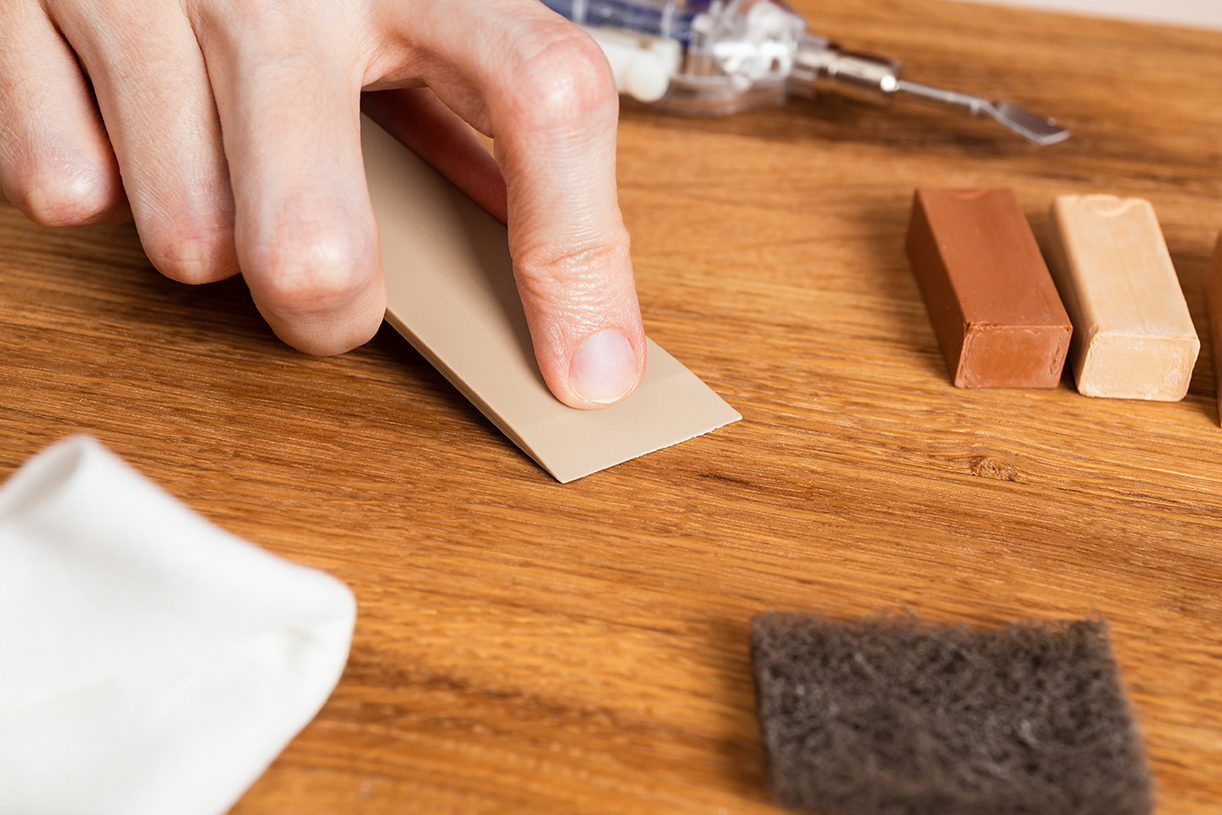
Close-up of hands filling cracks and dents in a wooden floor during a hardwood floor repair
Flooring Insights

Hardwood Floor Problems in Edmonton: When Gaps, Squeaks and Buckling Need Repair

August 14, 20269 min read
In this guide
  1. Hardwood Floor Problems in Edmonton: When Gaps, Squeaks and Buckling Need Repair
  2. Are Gaps Between Hardwood Boards Normal?
  3. When Should Hardwood Floor Gaps Be Repaired?
  4. Why Does My Hardwood Floor Squeak?
  5. What Is Hardwood Floor Cupping?
  6. What Causes Hardwood Floors to Buckle or Lift?
  7. Can Scratched or Dented Hardwood Be Repaired?
  8. Can One Damaged Hardwood Board Be Replaced?
  9. Does a Damaged Hardwood Floor Need to Be Replaced?
  10. What Should You Do When You Notice a Hardwood Floor Problem?
  11. Will Seasonal Hardwood Gaps Close on Their Own?
  12. Can Squeaky Hardwood Floors Be Repaired From Above?
  13. Should Cupped Hardwood Be Sanded Flat?
  14. Can Water-Damaged Hardwood Be Saved?
  15. Can Old Hardwood Flooring Be Repaired?
  16. Hardwood Floor Repair in Edmonton

Hardwood Floor Problems in Edmonton: When Gaps, Squeaks and Buckling Need Repair

A gap, squeak or uneven board does not always mean that a hardwood floor needs to be replaced. Wood naturally responds to changes in its environment, and some movement can be expected throughout the year. However, persistent gaps, lifting boards, moisture damage and worsening noises may indicate that the floor or the surface beneath it needs professional attention.

Some changes call for nothing more than patience, while others point to a hardwood floor repair Edmonton homeowners should not postpone.

The challenge for homeowners is knowing which changes are normal and which ones should be assessed.

Here are some of the most common hardwood floor problems found in Edmonton homes, what they may mean and how they can often be repaired.

Are Gaps Between Hardwood Boards Normal?

Small gaps can appear between hardwood boards when the wood loses moisture and contracts. This may be more noticeable during Edmonton’s heating season, when indoor conditions can become drier.

Seasonal gaps are generally less concerning when they appear during dry periods, remain relatively consistent across the floor and become smaller when indoor humidity rises. They are also less likely to indicate a serious problem when the boards remain secure and there is no cracking, lifting or ongoing movement.

Hardwood is a natural material, so some seasonal movement does not automatically indicate poor installation or permanent damage.

Gaps should be assessed when they are unusually wide, remain open throughout the year or are concentrated in one section of the room. Persistent gaps can be related to the condition of the boards, the installation method, subfloor movement, previous moisture exposure or changes within the home.

It is usually best to identify the cause before filling the gaps. A filler applied to a floor that is still expanding and contracting may loosen, crack or become more noticeable over time.

When Should Hardwood Floor Gaps Be Repaired?

A professional inspection may be appropriate when gaps remain visible through every season, individual boards are shifting or the spaces are becoming progressively wider. Cracked or splitting boards, sudden changes after water exposure and uneven or unstable areas can also indicate that more than ordinary seasonal movement is occurring.

Depending on the condition of the floor, the solution may involve localized repairs, replacement boards, refinishing or attention to the subfloor. A professional assessment can help determine whether the issue is cosmetic, environmental or related to the flooring structure.

Why Does My Hardwood Floor Squeak?

A squeaking floor usually means that movement is occurring somewhere within the flooring assembly.

The sound may come from hardwood boards moving against one another, movement around the fasteners or flexing within the subfloor. In older homes, settling, previous renovations and the original construction of the floor may also contribute.

An occasional squeak in an established hardwood floor is not necessarily an urgent concern. It becomes more important to investigate when the noise is new, spreading or accompanied by movement underfoot. A soft or uneven area, visible gaps, loose boards or a history of moisture exposure may also indicate that the floor should be inspected.

The correct repair depends on where the movement originates. Securing a loose board may solve one problem, while another floor may require subfloor correction or replacement of damaged material.

Simply driving additional fasteners through the finished surface without identifying the cause may damage the floor and leave the underlying problem unresolved.

What Is Hardwood Floor Cupping?

Cupping occurs when the edges of a hardwood board rise higher than its centre, creating a shallow curved or wavy appearance across the floor.

This typically develops when the underside of the board contains more moisture than the top surface. Possible sources can include a plumbing leak, moisture beneath the flooring, a wet subfloor, repeated spills or a significant difference in conditions above and below the hardwood.

Cupping may affect only a few boards or extend across a larger area.

Before sanding or replacing cupped boards, the source of the moisture should be found and corrected. The wood also needs time to stabilize. Sanding a floor too early can create a different uneven condition if the boards later return toward their original shape.

A flooring professional can assess the extent of the damage and determine whether the boards may recover, can be refinished or need to be replaced.

What Causes Hardwood Floors to Buckle or Lift?

Buckling is more severe than ordinary seasonal movement. It occurs when boards lift, separate from the surface below or form raised sections within the room.

Significant moisture exposure is one common cause. Leaks, flooding, insufficient expansion space, restricted movement near walls and transitions, adhesive failure, fastener problems and subfloor conditions may also contribute.

Buckled flooring should be assessed promptly, particularly when the affected area is growing or creating a tripping hazard.

The repair may involve removing damaged boards, correcting the moisture or subfloor issue and installing matching replacement material. In many cases, only the affected section needs to be repaired rather than replacing the entire floor.

Can Scratched or Dented Hardwood Be Repaired?

Many scratches, dents and worn areas can be improved without replacing the floor.

The correct repair depends on how deeply the damage extends. Light scratches may affect only the finish, while deeper scratches can pass through the finish and into the wood. Dents may compress the wood fibres, while gouges can remove part of the board itself.

Depending on the condition of the floor, the solution may involve localized finish repair, colour blending, light sanding, recoating, full refinishing or replacement of an individual board.

A professional can also assess how well a repair is likely to blend with the surrounding flooring. The species, stain colour, finish, age and natural colour changes in the existing hardwood all influence the final appearance.

Can One Damaged Hardwood Board Be Replaced?

In many situations, one board or a small group of boards can be replaced without removing the entire floor.

A successful board replacement requires more than finding wood in a similar colour. The replacement material should closely match the existing species, width, thickness, profile, grain and grade. The new boards must also be carefully integrated into the existing installation pattern.

Once installed, the repaired area may require sanding, staining and colour blending so that it works visually with the surrounding floor.

Matching older flooring can require additional care because the original material may no longer be commonly stocked. Experience restoring hardwood in established and heritage homes can be especially valuable in these situations.

Does a Damaged Hardwood Floor Need to Be Replaced?

Not necessarily.

Hardwood is valued partly because it can often be repaired, restored or refinished. A floor that looks worn may still have many years of useful life remaining.

Repair or restoration may be suitable when the damage is limited to a specific area, most boards remain stable and secure and the wear is primarily within the finish. It may also be possible to preserve the floor when replacement boards can be matched, the hardwood is suitable for refinishing and any underlying subfloor issue can be corrected.

More extensive replacement may be considered when damage affects most of the floor, the boards are no longer stable, the material cannot be safely refinished or ongoing moisture has caused widespread deterioration.

The goal should be to preserve the existing hardwood whenever doing so will provide a stable, attractive and lasting result.

What Should You Do When You Notice a Hardwood Floor Problem?

Begin by observing the affected area rather than attempting an immediate cosmetic repair.

Consider when the problem first appeared, whether it changes with the seasons and whether it is becoming more noticeable. Recent leaks, spills, plumbing problems or renovations may also provide useful clues. It is also important to note whether the floor moves underfoot and whether the issue affects one board, one room or a larger area.

Avoid adding filler, sanding raised boards or fastening through the finished surface until the cause is understood. These approaches may temporarily hide the symptom while making the eventual repair more difficult.

A professional flooring assessment can help identify whether the issue is within the finish, the hardwood, the installation or the subfloor.

Will Seasonal Hardwood Gaps Close on Their Own?

Some small gaps may become less noticeable when indoor humidity rises. Gaps that remain open throughout the year, continue widening or appear alongside loose and damaged boards should be professionally assessed.

Can Squeaky Hardwood Floors Be Repaired From Above?

Some squeaks can be corrected through the finished floor, while others require access to the subfloor or the area below. The best approach depends on the location and cause of the movement.

Should Cupped Hardwood Be Sanded Flat?

Cupped hardwood should not be sanded immediately. The moisture source should be corrected, and the floor should be allowed to stabilize before sanding or refinishing is considered.

Can Water-Damaged Hardwood Be Saved?

It depends on the amount of water, how long the floor remained wet and whether the boards and subfloor have stabilized. Some affected boards can be dried, repaired or replaced, while more extensive damage may require a larger restoration.

Can Old Hardwood Flooring Be Repaired?

Yes. Original hardwood in older Edmonton homes can often be repaired, matched and refinished. The condition and remaining thickness of the boards will help determine the best approach.

Hardwood Floor Repair in Edmonton

Changes in a hardwood floor do not always mean complete replacement is necessary. With the right assessment and repair approach, many gaps, scratches, squeaks, damaged boards and localized moisture issues can be addressed while preserving most of the existing floor.

Freedom’s Flooring has served Edmonton and surrounding communities for more than 40 years. Our experienced team provides hardwood floor repairs, matching board replacement, localized sanding, colour blending, refinishing and subfloor preparation.

A timely hardwood floor repair Edmonton homes need often costs far less than a full replacement and preserves the original boards.

Contact Freedom’s Flooring to book a hardwood floor assessment.

Share
Freedom’s Flooring · Edmonton

Ready to Upgrade Your Floors?

Let’s bring your vision to life. Get in touch for a free quote, explore flooring samples, or book your in-home consultation today.